Introduction
The evidence presented in this section reflects my evolving competency in learning design and its alignment with my focus areas of emerging technologies, adult learning experience design, and workforce and organizational development. Across these projects, I have worked to design learning experiences that are relevant, adaptive, and grounded in the needs of adult learners and industry partners. These artifacts demonstrate how my design practice integrates applied expertise with a growing commitment to research-informed and context-responsive learning solutions.
A central aspect of my design work involves the thoughtful integration of artificial intelligence (AI) and machine learning–supported learning analytics to better understand learner engagement and performance. Rather than focusing on technology as an end in itself, I use data-informed insights to guide design decisions, refine learning environments, and support continuous improvement. This work is informed by human-centered design principles and iterative development processes, ensuring that technological tools enhance learner experience and evaluation practices rather than drive design choices independently.
My approach to adult learning experience design is grounded in learner-centered, collaborative, and application-focused principles. Drawing on user experience (UX) and user interface (UI) practices, as well as ongoing analysis of learner feedback and performance data, I design learning environments that emphasize clarity, relevance, and practical transfer. These projects reflect my ability to translate theory and research into applied design decisions that support both individual learning and organizational performance.
Workforce and organizational development further shape my design perspective by emphasizing the importance of aligning learning outcomes with industry needs and organizational contexts. Through partnerships with institutional leaders, subject matter experts, and industry stakeholders, I have contributed to initiatives like Quanta PWR Skills that address skill gaps and support workforce readiness. These experiences have strengthened my ability to design learning solutions that operate within broader systems and performance goals rather than as isolated instructional interventions.
Learning Design Philosophy
My learning design philosophy is grounded in the Successive Approximation Model (SAM), project management practices, and human-centered design. These frameworks support a collaborative and iterative approach in which stakeholder input, subject matter experts, learner feedback, and contextual constraints shape the design process. This approach emphasizes clear objectives, stakeholder alignment, and continuous refinement, enabling learning experiences to evolve in response to data and changing needs.
As my design practice continues to develop, as evident in the artifacts below, I am working to strengthen my expertise in advanced assessment design, inclusive and accessible learning practices, and large-scale or longitudinal evaluation of learning initiatives. I am also deepening my ability to translate findings from learning analytics research into practical design improvements. Developing these competencies requires collaboration with field experts such as subject matter experts, institutional researchers, and evaluation specialists, as well as continued engagement with current scholarship in learning analytics, systems-thinking, and performance evaluation. Strengthening these areas will allow me to design learning experiences that are not only engaging, but also systematically evaluated for long-term impact and organizational value.
Integration and Ongoing Development
Taken together, the artifacts in this section demonstrate both established competencies and areas of ongoing growth in my learning design practice. As I continue developing as a scholar-practitioner, I aim to more intentionally integrate learning design, evaluation, scholarship, and service by grounding design decisions in research, collaborating with experts across disciplines, and contributing evaluation insights to institutional and professional communities. This trajectory positions my design work not only as a means of improving individual learning experiences, but also as a mechanism for supporting organizational learning, workforce development, and broader contributions to the field.
Primary Evidence
The following primary evidence for competency in Learning Design includes instructional planning, course and training materials, and evaluations of learning design.

Quanta PWR Skills Communication Course
Instructional Design Plan
Instructional Plan Project Managment Project Communication
A needs analysis and instructional design plan for Quanta Service's Project Management Course about Communication.
View Evidence
Quanta PWR Skills Communication Course
Instructional Materials
Course Materials Project Managment Project Communication
Fully developed e-learning course following the PWR Skills Communication Course instructional design plan.
View Evidence
Quanta PWR Skills Communication Course
Formative Course Evaluation
Evaluation Project Managment Project Communication
Formative feedback from Quanta employees and subject matter experts about PWR Skills Communication course materials.
View Evidence
Professional Skills Courses
Instructional Design Plan
Instructional Plan Professional Skills Courses
Market needs analysis and instructional design plan for a set of regional workforce development courses for in-demand professional skills.
View Evidence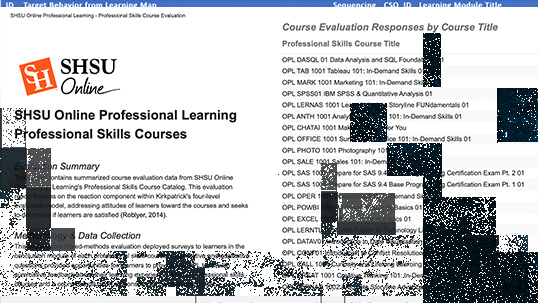
Professional Skills Courses
Summative Evaluation
Evaluation Professional Skills Courses
Summative evaluation feedback report addressing learner's perceptions about professional skills courses developed by the Online Professional Learning team.
View EvidenceSupplementary Evidence
Supplementary evidence includes additional instructional planning and resulting instructional materials.
LETE 1302 Online Technology and Learning Strategies
Instructional Design Plan
Instructional Plan
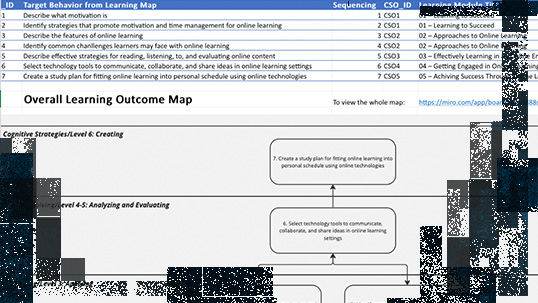
Instructional planning and design roadmap for a new undergraduate course about online technologies and learning strategies at SHSU.
View Evidence
LETE 1302 Online Technology and Learning Strategies
Instructional Content
Course Materials
Developed instructional media and learning content for the new undergraduate online technologies and learning strategies course.
View Evidence